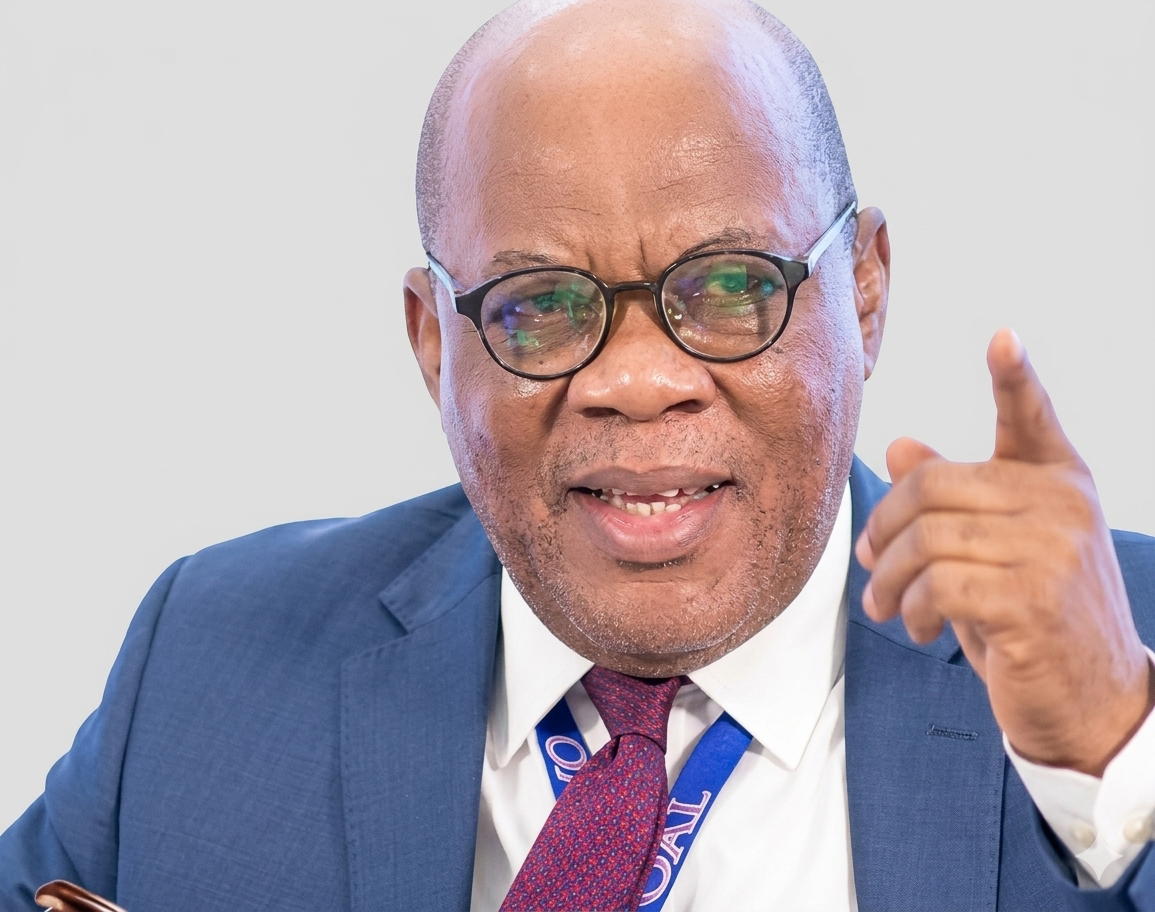
Dr Olisa Agbakoba, a Senior Advocate of Nigeria and former president of the Nigerian Bar Association, has asked the Independent National Electoral Commission to separate its exclusive power to declare final results from the public's right to report figures already announced at polling units. He made the case in a letter dated October 12, 2026, addressed to the INEC chairman, according to Vanguard News.
The letter responds to repeated warnings from INEC against publishing privately collated results ahead of the 2027 general election, which is three months away.
Why it matters
INEC has spent recent weeks telling media organisations and political actors to hold back. Its chairman, Prof. Joash Amupitan, first gave the warning on September 24, 2026 at the 24th All Nigeria Editors Conference in Enugu, and repeated it on October 6 in Abuja at a stakeholders' meeting marking 100 days to the election. He argued that under the Electoral Act only the commission can declare results.
Opposition parties have said they will run their own parallel transmission of polling-unit figures into situation rooms, a response to the 2023 experience when electronic transmission broke down and collation fell back to manual methods. Agbakoba's intervention now tests how far INEC's warning can reach.
What the letter argues
Agbakoba does not dispute that INEC alone formally declares results. His point, as Vanguard News reported, is that this responsibility should not be read as barring citizens or journalists from passing on results that polling officials have already announced, or from publishing what appears in genuine INEC records such as Forms EC8A to EC8E. He adds a condition: such reporting must be accurate and must not distort the official papers.
Where polling-unit sheets are uploaded to the IReV portal, he argues, the public, reporters, parties and observers can all see them, weigh them and relay their contents, so long as they say clearly where the information came from and what status it has.
On the law, Agbakoba says Section 25 of the Electoral Act 2026, which sets out the duties of electoral officers, has to be read together with other provisions of the Act and with Section 39(1) of the 1999 Constitution. That section protects freedom of expression, including the right to hold opinions and to receive and share ideas and information without interference. He describes that protection as central to whether people may communicate results that are already in the public domain.
He also pointed to a 1984 ruling by Justice Candide Johnson of the High Court of Lagos State in a case between the Nigeria Union of Journalists and the Inspector General of Police. The court held that a directive by the Federal Electoral Commission, INEC's predecessor, warning the media off unpublished results was unlawful and unconstitutional.
Agbakoba urged the commission to recognise the difference between declaring a result and lawfully publishing or projecting an outcome built on verifiable records.
The IReV question
The debate lands on a system that INEC once presented as transformative. Before the 2023 elections, the commission said electronic transmission of results from polling units to IReV would change how Nigerians followed voting. Vanguard News notes that the large sums sunk into the portal did not deliver that promise, as technical failures cut the process short, and the commission has not fully explained what went wrong.
With another general election fixed for January 2027, that history hangs over preparations. Public interest in the contest appears muted so far, with few campaign posters on display and parties yet to take to the streets. Much of the visible activity has been political figures issuing threats to opponents and residents, while INEC works through its timetable.
TheCable reported that Agbakoba's position is that journalists can only project winners using results carried on IReV. Sahara Reporters quoted him urging parties to monitor and compile their own results, saying that if INEC knows it is being watched it will be careful.
The argument also sits alongside wider pressure on how election law is read. At its 10th annual conference, the Guild of Corporate Online Publishers called for a court interpretation of the election law before the 2027 polls, Premium Times Nigeria reported.
What to watch: whether INEC answers the letter and clarifies when privately compiled figures may be published, and whether parties press ahead with parallel collation as campaigning begins.